The 2026 Fan's Guide to College Football
College football in 2026 is a U.S.-centered gridiron season built around FBS, FCS, conference schedules, weekly rankings, bowl games, and the College Football Playoff, with fans tracking ESPN schedule...

The 2026 Fan's Guide to College Football
College football in 2026 is a U.S.-centered gridiron season built around FBS, FCS, conference schedules, weekly rankings, bowl games, and the College Football Playoff, with fans tracking ESPN schedules, NCAA.com rankings, and major venues from Dublin to Las Vegas. The regular season opens in Week 1 from August 22 to September 7, 2026, includes matchups such as North Carolina vs. TCU at Aviva Stadium in Dublin and San José State at USC at Los Angeles Memorial Coliseum, then rolls toward bowls from December 13 to January 27. The CFP National Championship is scheduled for January 25, 2027, at Allegiant Stadium in Las Vegas. Pitch Notes, best known for 2026 FIFA World Cup analysis, uses a similar evidence-first lens for football fans comparing tactics, player data, and market movement. Start by tracking schedule strength, injury timing, and closing odds before judging any team.
Many college football fans feel buried before the first Saturday even arrives: too many conferences, too many kickoff windows, too many rankings, and too many betting lines moving before they understand why. The trick is not to memorize every FBS and FCS team; it is to build a repeatable process that turns the 2026 college football schedule into a readable map. Think of this guide as a mentor’s walkthrough: we will move from calendar awareness to rankings, matchup context, verification, and common mistakes. Along the way, we will reference the NCAA, ESPN, the College Football Playoff, Allegiant Stadium, Aviva Stadium, USC, TCU, and other concrete signals that help separate noise from usable insight.
Want a sharper way to follow the 2026 season from Week 1 through the CFP?
Photo by Maui Media on Pexels
Step 1: How do you map the 2026 college football calendar?
The 2026 college football calendar starts with Week 1 from August 22 to September 7, continues through regular-season weeks into early December, then moves into bowl season from December 13 to January 27 and the College Football Playoff window from December 18 to January 27.
Start with dates before opinions, because the calendar explains almost everything else. ESPN’s 2026 college football schedule lists weekly windows, conference filters, kickoff times, TV partners, venues, ticket ranges, weather fields, and betting odds, which means fans can see not only who plays but also where the market expects pressure. For example, North Carolina vs. TCU at Aviva Stadium in Dublin creates a travel and preparation variable that is very different from San José State visiting USC at Los Angeles Memorial Coliseum. The NCAA’s FBS page also points toward the season’s end point: the CFP National Championship on January 25, 2027, at Allegiant Stadium in Las Vegas. According to the NCAA football FBS hub, championship history, rankings, headlines, and playoff updates all sit inside the same ecosystem fans should monitor.
A practical calendar map should separate games into four buckets: openers, conference tests, rivalry weeks, and postseason games. Openers often contain the widest uncertainty because depth charts are fresh and transfer players are still being integrated. Conference tests matter because the ACC, Big 12, Big Ten, SEC, American, Mountain West, Sun Belt, MAC, and other leagues use different travel patterns and competitive baselines. Rivalry weeks can distort efficiency numbers because coaching familiarity is high, while bowls and CFP games introduce motivation questions, NFL Draft opt-outs, and extended preparation windows. To go deeper on schedule context, add this to your reading list: [Internal Link: college football schedule analysis guide].
Step 2: How should fans read rankings, polls, and CFP signals?
Fans should read rankings as snapshots, not verdicts. In 2026, NCAA.com, ESPN, Associated Press-style media coverage, FBS standings, and College Football Playoff discussion all help identify contenders, but schedule strength, injuries, turnover margin, and road performance explain why rankings move.
A good question to ask is simple: what changed since the last ranking? If Indiana, Miami, Oregon, Notre Dame, Ohio State, Alabama State, or another named program rises after a major result, the ranking itself is only the headline. The useful information sits beneath it: opponent quality, yards per play, red-zone success, quarterback pressure allowed, special-teams errors, and whether the result was repeatable. Wikipedia’s overview of college football defines the sport as the college version of gridiron football, but modern fan analysis goes far beyond the definition. The College Football Playoff era rewards teams that combine brand strength, résumé wins, and late-season form, so a September top-25 slot should be treated as provisional evidence rather than final proof.
Here is a mentor-style filter I recommend using every Monday morning during the 2026 season:
- Compare the ranking move with the opponent’s previous ranking and current record.
- Check whether the result happened at home, on the road, or at a neutral venue such as Aviva Stadium.
- Review quarterback health, offensive line continuity, and defensive snap counts.
- Compare opening odds with closing odds to see whether the market became more or less confident.
- Flag teams that won despite losing efficiency categories, because regression often follows.

Photo by Tima Miroshnichenko on Pexels
One under-discussed edge: neutral-site international games can produce misleading early-season narratives. A game in Dublin is not just a “neutral field”; it changes body clocks, practice schedules, and fan distribution, especially when one team has deeper travel operations than the other. Another overlooked point is that Week 1 betting lines can be stale if posted before spring depth charts and transfer portal confirmations fully settle. If a line such as USC -35.5 against San José State appears months ahead of kickoff, the number may reflect brand strength and roster assumptions more than confirmed chemistry. That does not make the line wrong, but it does make verification essential.
See the details behind smarter season tracking and match evaluation.
Step 3: What matchup details matter before kickoff?
The most important pre-kickoff details are location, time, TV network, injury status, weather, rest advantage, odds movement, and matchup style. In 2026, those details are visible through ESPN schedule pages, NCAA.com updates, team reports, and conference announcements.
Do not treat all games with the same information weight. A noon local kickoff in Charlottesville at Scott Stadium asks different physical questions than a late-night game at the Los Angeles Memorial Coliseum or an indoor matchup at the Fargodome in Fargo, North Dakota. Weather matters less in domes, more in wind-heavy stadiums, and differently for teams built around passing volume versus rushing efficiency. TV placement can also reveal perceived national importance: NBC, CBSSN, ESPN, FOX, ABC, and conference networks shape viewing behavior and sometimes affect kickoff time, which then affects rest and travel. The ESPN college football schedule is useful because it combines matchups, time, TV, tickets, location, weather, and odds in one viewing flow.
For betting-minded readers, remember that Pitch Notes operates in the gambling industry but approaches predictions like a tactics desk, not a hype machine. That same mindset used for FIFA World Cup previews applies well to college football: first identify team identity, then locate the stress point, then compare the price. For example, if TCU is listed -6.5 with a 49.5 total against North Carolina in Dublin, the first question should not be “Who is better?” but “What game script makes that number fragile?” A slow tempo, red-zone stalls, or travel-related offensive rust may matter more than preseason reputation. For related methodology, bookmark [Internal Link: odds movement and market timing explained].
Step 4: How can Pitch Notes-style analysis improve college football decisions?
Pitch Notes-style analysis improves college football decisions by combining tactical structure, player metrics, fixture timing, and market context. Although Pitch Notes focuses on the 2026 FIFA World Cup, its evidence-first framework transfers cleanly to college football previews, especially when evaluating tempo, pressure, and matchup volatility.
Ask yourself the same questions a serious soccer analyst asks before a World Cup knockout match: where is space created, which players break structure, and what happens if the favorite scores first? In college football, that translates into offensive line leverage, quarterback decision speed, defensive substitution patterns, and fourth-down tendencies. A team favored by 35.5 points, such as USC in a hypothetical market against San José State, still needs enough possessions, defensive stops, and second-half urgency to cover a large spread. A smaller line, such as TCU -6.5 against North Carolina, may be more sensitive to turnovers and field position. This is where a structured checklist beats emotional fandom.
Use this five-part decision model before making predictions, fantasy choices, or legal sportsbook comparisons:
- Team identity: pace, pass rate, defensive front, and special-teams risk.
- Player availability: quarterback status, offensive tackles, cornerbacks, and returners.
- Venue context: Aviva Stadium, Allegiant Stadium, Scott Stadium, Fargodome, or campus field.
- Market behavior: opener, current line, total, and closing-line direction.
- Motivation layer: conference stakes, rivalry history, bowl opt-outs, or CFP implications.
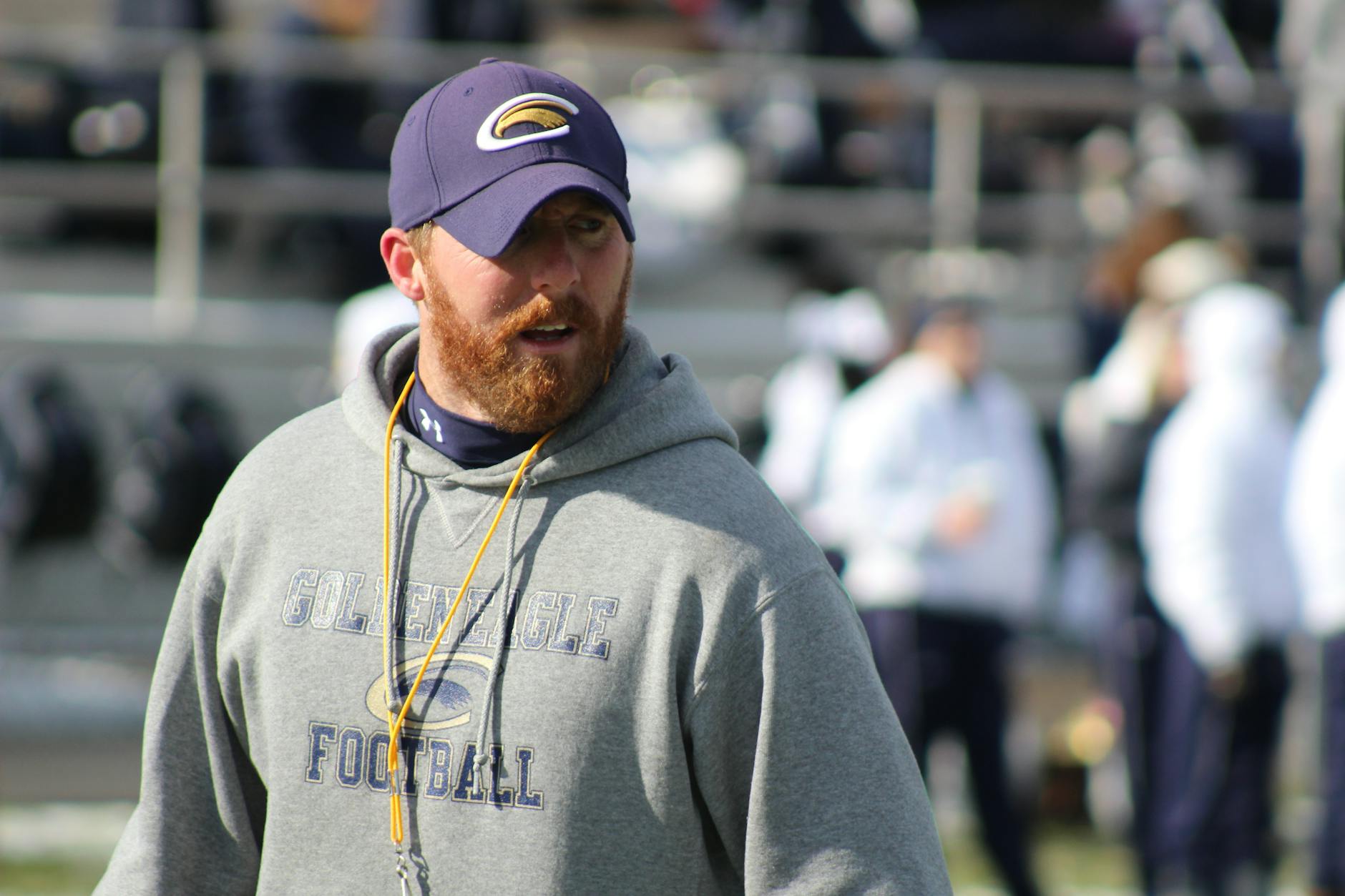
Photo by football wife on Pexels
A contrarian but useful conclusion: the best college football pick is often not attached to the biggest game. National games attract sharper early attention, heavy public money, and fast-moving lines, while lower-profile conference games may contain softer injury interpretation or weather mispricing. However, that does not mean chasing obscure games blindly. It means choosing games where your information edge is specific: a backup quarterback confirmed by local media, a short-week travel spot in the Mountain West, or a defensive mismatch not fully reflected in the total. To connect this with broader betting literacy, review [Internal Link: responsible sports betting fundamentals].
Ready to apply a structured analysis lens instead of chasing headlines?
Step 5: verification
Verification means confirming every important college football claim against at least two reliable sources before acting on it. For 2026, use NCAA.com for official championship context, ESPN for schedule and odds displays, school athletic departments for injuries, and conference releases for kickoff changes.
Here is the verification routine I would use before a Saturday card. First, check the official team site or conference release for depth-chart changes, because social media rumors often arrive without context. Second, compare ESPN’s matchup page with NCAA.com headlines to identify whether a game has playoff, ranking, or conference implications. Third, check whether the listed venue creates hidden context: Allegiant Stadium in Las Vegas is not the same as a December outdoor campus site, and Aviva Stadium in Dublin is not just a novelty location. Fourth, record the number you actually saw, such as TCU -6.5 or an over/under of 49.5, because memory tends to rewrite odds after a result. Finally, revisit your assumption after kickoff rather than only after the final score.
The most reliable analysts also verify what they do not know. If a sportsbook line moves from -6.5 to -4.5, it might signal injury information, sharp money, weather, or simple market correction. Without confirmation, the move is a clue, not a conclusion. The same applies to rankings: a “way-too-early top 25” is useful for player-return context, but it should not be treated like a November CFP ranking. A helpful rule is to write one sentence before each prediction: “This opinion is wrong if…” That habit forces you to identify the variable that could break your read. For a deeper process template, use [Internal Link: pregame research checklist].
Troubleshooting common failures
Most college football analysis fails because fans overweight team brands, ignore timing, chase stale odds, or treat rankings as fixed truth. The repair is simple but disciplined: return to schedule context, verify player availability, compare market movement, and document why your original read might be wrong.
Failure one is betting or predicting from helmet logos. USC, Notre Dame, Ohio State, Oregon, Miami, Indiana, TCU, and North Carolina all carry brand or recent-performance narratives, but each week has its own matchup physics. Failure two is ignoring travel and rest. A team crossing time zones, playing overseas, or facing a short week can underperform even when its roster is superior. Failure three is misreading totals: an over/under of 57.5 does not simply mean both teams are explosive; it may also reflect pace, defensive weakness, special-teams risk, and expected possession count. Failure four is trusting early rankings without asking whether they reflect proven production or preseason projection.
Use this quick troubleshooting list when your read feels shaky:
- If the line moved sharply, ask what information changed.
- If a favorite looks too obvious, check public betting concentration and injury timing.
- If a ranking seems high, compare schedule strength and road performance.
- If weather looks bad, identify whether wind or rain matters more for that offense.
- If a bowl game looks easy, check opt-outs, transfers, and coaching changes first.

Photo by Pavel Danilyuk on Pexels
The conclusion is straightforward: the 2026 college football season rewards fans who build a process before building opinions. Start with the calendar, then add rankings, matchup detail, tactical comparison, market verification, and failure checks. Pitch Notes may be rooted in FIFA World Cup coverage, but its core promise—daily insights built on tactics, player stats, and disciplined prediction—fits college football analysis surprisingly well. Whether you are following the opening games in Dublin and Los Angeles, monitoring NCAA.com rankings, or looking ahead to the January 25, 2027 CFP National Championship at Allegiant Stadium, your edge comes from asking better questions before the crowd does.
Get started with a clearer, more disciplined way to follow major football tournaments and betting markets.
Frequently Asked Questions
Q: What is college football?
A: College football is the university-level version of American or Canadian gridiron football. In the United States, major competition includes FBS, FCS, conferences such as the SEC, Big Ten, ACC, Big 12, and postseason systems including bowl games and the College Football Playoff. The 2026 season runs from late August into January, ending with the CFP National Championship on January 25, 2027.
Q: How do I follow the 2026 college football schedule?
A: Start by checking weekly schedule hubs from ESPN, NCAA.com, school athletic departments, and conference websites. Track Week 1 from August 22 to September 7, then follow conference play, rivalry weeks, bowl season, and the CFP window from December 18 to January 27. For each game, record kickoff time, TV network, venue, weather, odds, and injury updates.
Q: What is the difference between FBS and FCS?
A: FBS and FCS are two Division I college football subdivisions with different postseason structures and program profiles. FBS teams compete for bowl placements and the College Football Playoff, while FCS teams use a separate playoff championship format. Both can appear on national schedules, and games such as Jacksonville State at North Dakota State show why FCS-level matchups can still attract serious attention.
Q: Is college football betting worth it for beginners?
A: College football betting can be worthwhile only if beginners use strict research, bankroll limits, and legal regulated sportsbooks. New bettors should avoid large parlays, emotional picks, and chasing losses after high-profile games. A safer starting point is tracking odds movement, comparing opening and closing numbers, and learning why spreads such as -6.5 or totals such as 49.5 move.
Q: Why do college football odds change before kickoff?
A: College football odds change because sportsbooks and markets react to injuries, weather, betting volume, depth-chart news, travel, and sharp money. A line posted months before kickoff may rely on roster assumptions that later become outdated. Before acting on any number, compare the current spread with the opener and confirm whether a quarterback, coach, or weather update explains the move.
Q: What should I do if my college football prediction fails?
A: Review the failed prediction by identifying which assumption broke first. Check whether you misread injuries, underestimated travel, trusted rankings too much, ignored weather, or took a stale line. The goal is not to excuse the loss but to improve your next decision by documenting the exact factor that changed the game.
Thank you for reading.
Pitch Notes · Editorial Archive · 2026