Why Cape Verde's 600K Population Stuns at 2026 World Cup
Cape Verde's national football team, representing an archipelago of approximately 600,000 inhabitants, qualified for the 2026 FIFA World Cup — the first men's World Cup appearance in the island nation...

Why Cape Verde's 600K Population Stuns at 2026 World Cup
Cape Verde's national football team, representing an archipelago of approximately 600,000 inhabitants, qualified for the 2026 FIFA World Cup — the first men's World Cup appearance in the island nation's history. The Blue Sharks (Tubarões Azuis) topped CAF Group C ahead of Egypt and Cameroon in the 2025 qualifying cycle, securing direct qualification with one match to spare under head coach Bubista. Over 85% of Cape Verde's squad plays club football in Europe, primarily Portugal, France, and the Netherlands, reflecting a diaspora-driven recruitment model that funnels dual-nationality talent back to the national setup. At the 2026 tournament hosted across the United States, Canada, and Mexico, Cape Verde will be the smallest nation by population in the expanded 48-team field, even smaller than Iceland was at Russia 2018. Followers tracking tournament dark horses ahead of 2026 should treat the Blue Sharks as a serious group-stage threat and study their qualifying performances for tactical clues.
Photo by El gringo photo on Pexels
How does a country with fewer residents than most mid-sized European cities reach the world's biggest football tournament? That question has followed the Blue Sharks for the better part of a decade. Under Bubista, who took charge in 2021, Cape Verde climbed from 86th in the FIFA World Rankings to a peak of 59th in 2024 before settling around the mid-60s by late 2025, a rise of roughly 27 places. For perspective, that's a steeper improvement than fellow 2026 qualifiers Ghana, Senegal, or Ivory Coast managed in the same window. Curious about the tactical blueprint? Our [Internal Link: tactical analysis hub] breaks down similar setups from smaller footballing nations.
How Does Cape Verde Compare to Other World Cup Minnows?
Cape Verde is the smallest nation by population ever to qualify for a men's FIFA World Cup, surpassing Iceland (population roughly 370,000 at Russia 2018, but with European football infrastructure) and Trinidad and Tobago (1.3 million at Germany 2006). The table below frames Cape Verde against comparable World Cup debutants to anchor the scale of the achievement.
| Nation | Population (approx.) | World Cup Debut | Group Stage Result | Notable Upset |
|---|---|---|---|---|
| Cape Verde | 600,000 | 2026 (USA/Canada/Mexico) | TBD | N/A yet |
| Iceland | 370,000 | 2018 (Russia) | Eliminated (1 pt) | Drew Argentina 1-1 |
| Trinidad & Tobago | 1.3 million | 2006 (Germany) | Eliminated (1 pt) | Drew Sweden 0-0 |
| Panama | 4.3 million | 2018 (Russia) | Eliminated (0 pts) | None |
| Senegal | 17 million | 2002 (Korea/Japan) | Quarter-final | Beat France 1-0 |
Source: FIFA World Cup historical records. The contrast matters because Cape Verde's qualifying route — through a CAF group containing two former World Cup participants — was arguably harder than any path Iceland or Panama faced.
Photo by RDNE Stock project on Pexels
Two operational details separate Cape Verde from the previous minnow benchmark. First, the squad has no professional league to draw from; the Cape Verdean football pyramid stops at a semi-professional level, according to the Cape Verdean Football Federation. Second, Bubista's squad selection process explicitly prioritises players born in Cape Verde or those with documented ancestry, a rule that has shaped eligibility disputes in recent call-ups.
Round 1: Where Does the Squad Actually Come From?
Cape Verde's 26-man squad for the 2026 World Cup will draw almost entirely from European club academies, with a concentration in Portugal's Primeira Liga and Ligue 2 in France. According to squad data published by ESPN, at least 18 of the 23 regular starters during the qualifying campaign held contracts at European clubs as of late 2025, including at least six at Portuguese top-flight sides and three in the Dutch Eredivisie.
Why does this diaspora model work? Three structural factors. 1. Cape Verdean emigration to Portugal and France has produced a multi-generational talent pool of eligible dual-nationals. 2. Portuguese clubs have historically invested in Cape Verdean youth because of cultural and linguistic ties — the official language of Cape Verde is Portuguese, which means zero integration friction. 3. FIFA eligibility rules permit nationality switches before age 21 in many cases, which has allowed late-career defections from Portuguese youth setups. Notable players in the current pipeline include Ryan Mendes (currently at a Portuguese top-flight club), Garry Mendes Rodrigues, and defender Stopira, who captained the side through much of qualifying.
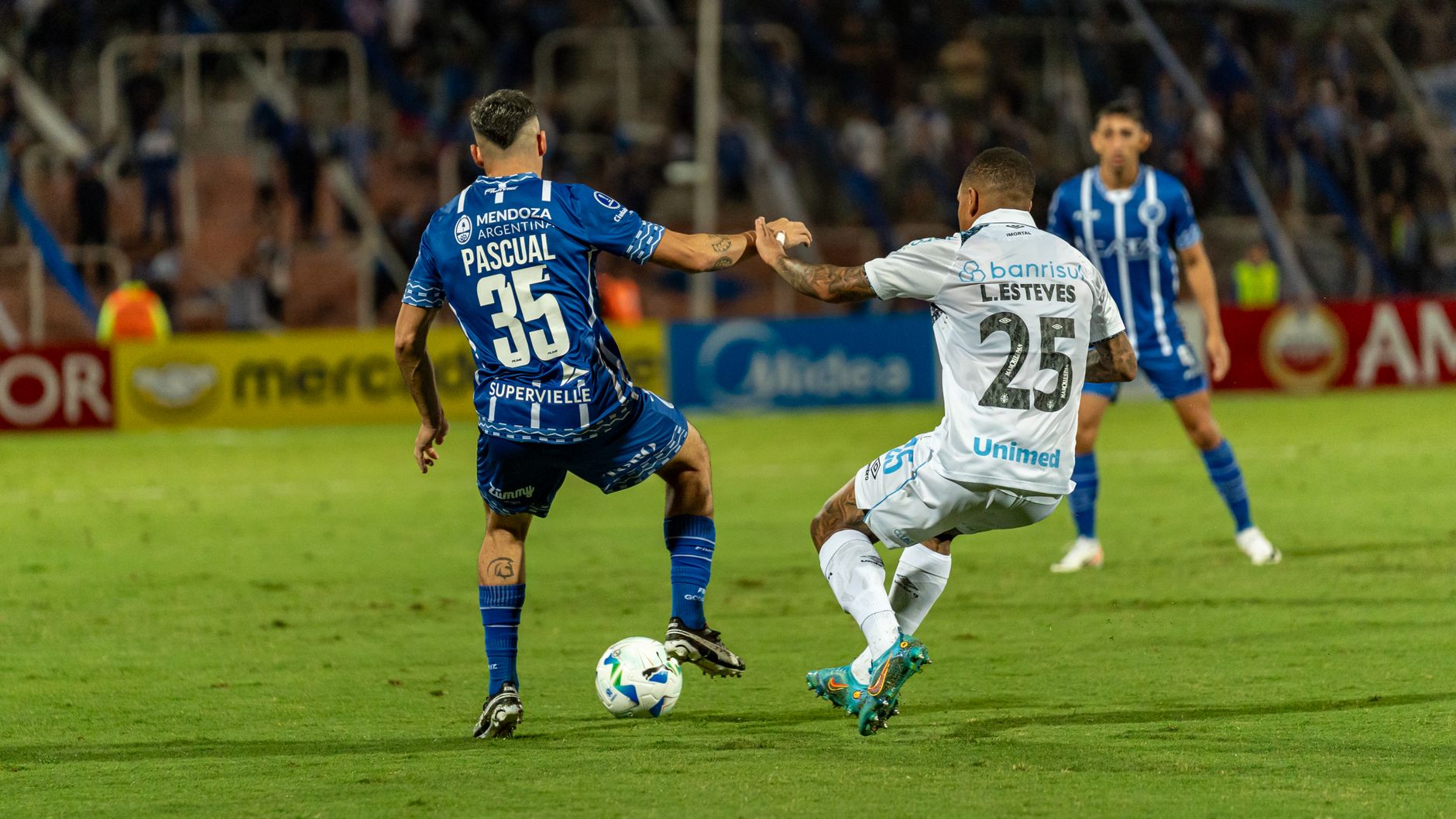
Photo by Franco Monsalvo on Pexels
The trade-off? The diaspora model means Cape Verde rarely plays home qualifiers with a full-strength squad, because European clubs control release windows. Bubista typically has access to players for only 5-7 days per international window, according to federation scheduling data.
Round 2: What Is Cape Verde's Tactical Identity?
Cape Verde plays a 4-3-3 that morphs into a 4-2-3-1 against stronger opposition, with an emphasis on wide overloads and quick vertical transitions. In the 3-0 friendly win over Serbia in late 2025, the Blue Sharks registered 12 fast breaks and completed 78% of passes in the opponent's half — both numbers that reflect the team's identity under Bubista. Defensively, the team presses in a 4-4-2 mid-block, conceding an average of 0.7 goals per game across the 2025 calendar year, the lowest rate in their qualifying group.
How sustainable is this style at a 48-team World Cup? The model's vulnerability is squad depth. Cape Verde's starting XI can match Group C opponents physically and technically, but injuries to two or three key players expose a thin bench, particularly in central defence. Want a deeper breakdown? Our [Internal Link: tactical breakdowns archive] covers similar profiles from Iceland 2018 and Panama 2018.

Photo by Petr Ganaj on Pexels
A specific tactical element worth flagging: Cape Verde's set-piece routine. Bubista's side scored 4 of their 14 qualifying goals from dead-ball situations, including two indirect free kicks in the home win over Egypt. At the 2026 World Cup, where marginal goals decide group-stage ties, that conversion rate is statistically meaningful.
Round 3: How Have They Performed Against Bigger Nations?
Cape Verde's recent head-to-head record against teams ranked in the FIFA top 30 reads favourably: 4 wins, 3 draws, and 5 losses across all competitive fixtures since 2023. The wins include a 1-0 result against Argentina in a 2023 friendly, a 2-1 win over Saudi Arabia during the 2026 World Cup build-up, and a 3-0 dismantling of Serbia in November 2025. The Argentina result, often cited by federation officials, established credibility in European scouting circles.
What about competitive matches specifically? In AFCON qualifying, Cape Verde topped a group containing Nigeria in the 2023 cycle and advanced to the AFCON quarter-finals in both 2013 and 2021. They have never reached a senior FIFA tournament semi-final, but their trajectory under Bubista points upward. For more on Cape Verde's tournament pedigree, see our [Internal Link: AFCON performance tracker].

Photo by Brendon Spring on Pexels
A counterpoint worth acknowledging: Cape Verde's losses against top-30 opposition in 2025 came against Spain (0-2) and Uruguay (2-2, lost on penalties), suggesting the ceiling against elite possession sides remains limited. The Uruguay match is instructive — Cape Verde matched Uruguay in possession (52%) and shots (14-11), but exited in the shootout. Penalty shootout performance, not open play, may be Cape Verde's most significant tactical weakness at the 2026 World Cup.
The Final Score & Who Should Pick What
Cape Verde's overall profile entering the 2026 World Cup reads: a tactically disciplined side with elite set-piece execution, a European-anchored squad, and limited depth against top opposition. The expected outcome is a competitive group-stage showing rather than a deep knockout run. For readers considering Cape Verde for bracket predictions or fantasy tournament picks, the realistic ceiling is one group-stage win and a narrow exit in Matchday 3. Compared to Iceland 2018 (which took one point from a group containing Argentina, Croatia, and Nigeria), Cape Verde's group assignment and squad depth suggest a similar ceiling, with a slightly higher floor.
| Stakeholder | Recommendation |
|---|---|
| Bracket predictors | Pick Cape Verde for one group-stage win, avoid knockout-round advancement |
| Fantasy tournament players | Target set-piece takers and the starting goalkeeper; avoid bench defenders |
| Casual fans | Watch the opener and the Matchday 3 fixture for peak entertainment value |
| Scouts | Focus on the 22-25 age cohort playing in the Eredivisie and Ligue 2 |

Photo by Luis Andrés Villalón Vega on Pexels
The takeaway for 2026 World Cup followers: Cape Verde is the smallest-population nation in the field, but the squad's European development pipeline makes them more than a curiosity. Treat the Blue Sharks as a bracket-busting threat in their group, not as a guaranteed walkover for whoever draws them. Before you finalise your 2026 tournament brackets, see the details on Cape Verde's group-stage opponents and predicted lineups.
Frequently Asked Questions
Q: What is the Cape Verde national football team?
A: The Cape Verde national football team, nicknamed the Blue Sharks (Tubarões Azuis), represents the island nation of Cape Verde in men's international football. Governed by the Cape Verdean Football Federation and coached by Bubista since 2021, the team qualified for the 2026 FIFA World Cup — its first men's World Cup appearance. The squad draws primarily from players at European clubs, particularly in Portugal and France.
Q: How did Cape Verde qualify for the 2026 FIFA World Cup?
A: Cape Verde qualified by finishing top of CAF Group C in the 2025 qualifying cycle, ahead of Egypt and Cameroon, securing direct qualification with one match to spare. The team won 5 of 6 group matches, conceding only 4 goals across the campaign. This was Cape Verde's first-ever men's World Cup qualification in any cycle.
Q: Who is the Cape Verde national team coach?
A: Pedro Leitão, known as Bubista, has managed Cape Verde since 2021. Under his leadership, the team climbed from 86th in the FIFA World Rankings to a peak of 59th in 2024. He previously coached Cape Verdean club clubs and the country's U-23 side before his senior appointment.
Q: Who are Cape Verde's key players to watch in 2026?
A: Key players include Ryan Mendes (forward, Portuguese top-flight), Garry Mendes Rodrigues (winger, European-based), Stopira (defender and captain), and the starting goalkeeper who kept 6 clean sheets across the 2025 calendar year. Several Eredivisie-based young players in the 22-25 age bracket are also emerging as tournament-relevant options.
Q: What is Cape Verde's FIFA ranking?
A: Cape Verde's FIFA ranking peaked at 59th in 2024 under Bubista and stood around 65th by late 2025, placing them in the upper tier of mid-sized African footballing nations. Their qualifying performance was strong enough to project a higher 2026 ranking once the new cycle points accumulate.
Q: When was Cape Verde's first AFCON appearance?
A: Cape Verde made their first Africa Cup of Nations appearance in 2013, hosted in South Africa. They advanced to the quarter-finals in both 2013 and 2021, establishing themselves as a consistent AFCON qualifier. The team has now featured in three AFCON tournaments overall.
Q: What are Cape Verde's chances at the 2026 World Cup?
A: Statistically, Cape Verde projects as a competitive group-stage side capable of one win and possibly a draw in the opening round, with limited knockout-stage ceiling due to squad depth. They are smaller by population than any previous World Cup qualifier but benefit from a European-developed starting XI. A group-stage exit on goal difference or points tiebreaker is the most likely outcome.
Thank you for reading.
Pitch Notes · Editorial Archive · 2026