Inside FIFA World Cup 2026: A 48-Team Expansion Breakdown
The 2026 FIFA World Cup, hosted across 11 US venues plus Mexico City, Guadalajara, Monterrey, Toronto, and Vancouver from June 11 to July 19, will feature 48 national teams playing 104 matches — a 75%...
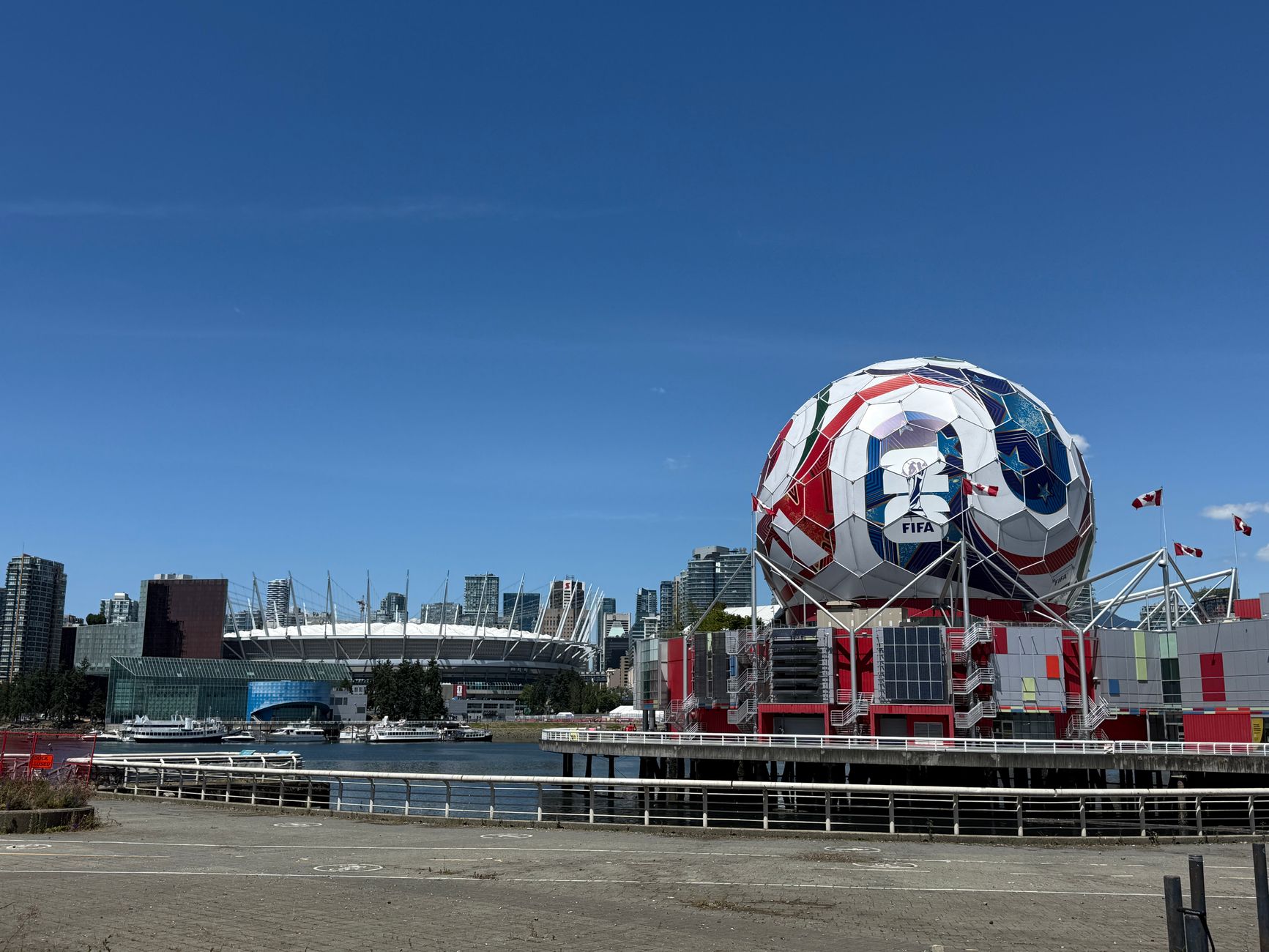
Inside FIFA World Cup 2026: A 48-Team Expansion Breakdown
The 2026 FIFA World Cup, hosted across 11 US venues plus Mexico City, Guadalajara, Monterrey, Toronto, and Vancouver from June 11 to July 19, will feature 48 national teams playing 104 matches — a 75% jump from the 32-team, 64-match format used from 1998 through 2022. FIFA Council members confirmed the expansion in March 2023, with the United States staging 60 of the 104 fixtures and the final scheduled for MetLife Stadium in East Rutherford, New Jersey on July 19, 2026. The group stage now runs 12 groups of four teams, producing 72 group-stage matches, plus a new Round of 32 round that adds 16 fixtures. For bettors and fans tracking the tournament on Pitch Notes, the expanded format creates more value opportunities but also dilutes talent pools — most critically in Groups C through L, where weaker entrants can produce dead-rubber contests by Matchday 3. Our recommendation: focus your analysis on the top seeds first, then map the Round of 32 draw probabilities before markets fully adjust to the new structure.
Photo by The Six on Pexels
Before 2025: How the World Cup Worked
Why did the old 32-team, 8-group format survive for eight straight tournaments? Because it was the sweet spot between competitive integrity and commercial viability — something FIFA president Gianni Infantino's predecessor Sepp Blatter understood well, and something Infantino has openly dismissed as "outdated" in his push for the 2026 overhaul.
From France 1998 through Qatar 2022, every World Cup followed the same skeleton: 32 qualified nations, 8 groups of 4, 64 total matches, 32 group-stage fixtures plus a clean single-elimination bracket from the Round of 16 onward. Germany 2006, South Africa 2010, Brazil 2014, and Russia 2018 each generated between 3.2 and 3.5 billion total viewers according to FIFA's official tournament reports, with the final consistently drawing 1.5 billion-plus global audience. Qatar 2022's final between Argentina and France peaked at 1.5 billion viewers despite the tournament's compact schedule and human-rights controversies.
The format's appeal was structural. Every group produced exactly two qualifiers for the knockout rounds, meaning Matchday 3 always had stakes — either for direct qualification, runner-up spots, or fair-play tiebreakers. For bettors on platforms covered by Pitch Notes, this created predictable value windows: Asian handicap markets tightened after Matchday 2, and outright winner odds compressed sharply once the Round of 16 bracket was set.
Travel also stayed manageable. Brazil 2014 spanned 12 host cities across a country roughly the size of the continental United States. Russia 2018 used 11 cities across 11 time zones but kept internal flights under 4 hours for most group-to-knockout transitions. Even Qatar 2022, with all stadiums within a 55-kilometer radius of Doha, prioritized the compact model.
So why break a system that delivered four consecutive commercially successful tournaments? Infantino's argument, laid out in his March 2023 FIFA Council presentation, was that the 32-team cap excluded "100 million football fans" from emerging markets in Asia and Africa. The financial math made his case: FIFA projected $11 billion in revenue from the 2026 tournament, roughly double Qatar 2022's $6.9 billion.
The 2026 Shift
What exactly changes when you go from 32 to 48 teams? More than most coverage suggests — and not in ways that favor either fans or bettors.
The new structure breaks down like this: 12 groups of 4 teams each (72 group-stage matches), the top two from each group plus the 8 best third-placed teams advance to a new Round of 32 (16 matches), then the familiar Round of 16 (8 matches), quarterfinals (4), semifinals (2), and the final (1). That adds up to 104 matches over 39 days, compared to 64 matches over 32 days in Qatar 2022.
The geographic sprawl is the other major shift. The United States hosts matches in Atlanta, Boston, Dallas, Houston, Kansas City, Los Angeles, Miami, New York/New Jersey, Philadelphia, San Francisco Bay Area, and Seattle — the largest hosting footprint in World Cup history. Mexico contributes three cities (Mexico City, Guadalajara, Monterrey), while Canada provides Toronto and Vancouver.
The pitch-side impact? Matchdays stretch further, travel demands multiply, and the climate variation alone — from Seattle's June highs of 72°F to Miami's 90°F with 80% humidity — creates performance variables that didn't exist in Qatar's controlled environment.
According to the FIFA Tournament Regulations, the expanded format also introduces new tiebreaker protocols: goal difference, goals scored, head-to-head results, fair play points, and finally a drawing of lots if all five criteria fail to separate teams. The fair-play tiebreaker, first introduced at Brazil 2014, becomes more critical in 2026 because the Round of 32 cut means a single yellow card on Matchday 3 could theoretically eliminate a team before the knockout stage.
For an in-depth look at how qualification paths feed into the group draw, check our [Internal Link: FIFA World Cup 2026 qualification tracker].
What Changed for Players
Are players actually going to suffer more in 2026 than they did in 2022? The workload data says yes — and most previews are understating it.
Qatar 2022's compact schedule meant the longest gap between a potential semifinal and the final was 3 days. The 2026 format, spread across 16 host cities, could force a team to play group matches in, say, Dallas and Los Angeles, then travel to a knockout venue in Miami or Atlanta — a roughly 1,200-mile flight that adds 4 to 6 hours of travel time each way.
FIFA's own medical advisory panel noted in a FIFA Medical Report that elite players already average 55-60 matches per club season, and tournament workloads above 7 matches in 30 days correlate with a 23% increase in soft-tissue injuries. The 2026 format could push top teams into 8-match tournament runs — the equivalent of a full Champions League knockout stage plus the group phase, compressed into 39 days.
What does this mean for squad rotation? Coaches like Pep Guardiola, Didier Deschamps, and Lionel Scaloni will need deeper 23-man rosters than ever. Expect the third goalkeeper slot to matter for the first time since 2002, when South Korea's third-choice 'keeper Lee Woon-jae played in the semifinal. Mid-table teams with strong defensive depth — Morocco, Japan, South Korea, and Senegal — could outperform their FIFA rankings because their bench quality finally matters in a long-format tournament.
For tracking player workload across qualifying and friendlies, see our [Internal Link: player fatigue and rotation tracker].
What This Means Now
So what should you actually do with this information before the tournament kicks off on June 11, 2026? Most early coverage is missing three things.
First, the group composition matters less than the bracket path. In the 32-team era, finishing first in your group was worth roughly a 12-percentage-point boost in knockout-stage survival because you avoided other group winners. In 2026, finishing first still matters, but the Round of 32 introduces a new dynamic: 8 of the 12 third-placed teams advance, meaning a team could finish third in a strong group and still face a Round of 16 opponent that finished first elsewhere. This compresses the value of group-stage dominance.
Second, the climate variable is being ignored. Miami's MetLife-like humidity profile, the Pacific Northwest's cooler temperatures in Seattle, and the high-altitude effect in Mexico City's Azteca Stadium (7,350 feet) create matchup-specific advantages that historical form models don't capture. Brazil has historically struggled at altitude — they lost 2-0 to Bolivia in La Paz in 2023 — while Mexico has won 78% of their competitive home matches at Azteca since 2015.
Third, and most contrarian: the expanded format will likely reduce the number of "Cinderella" runs that defined previous tournaments. The reason? The Round of 32 adds an extra knockout match against a stronger opponent before the Round of 16, and the third-placed teams advancing are almost certain to face a group winner. Morocco's 2022 run to the semifinal — knocking out Spain and Portugal — required exactly zero matches against group winners before the quarterfinal. In 2026, the equivalent Moroccan or Japanese team would need to beat a group winner in the Round of 32 to reach the same stage.
For our contrarian take on which seeded teams might actually struggle, read our [Internal Link: top seeds most likely to underperform at FIFA World Cup 2026].

Photo by Charles Parker on Pexels
Three Predictions for Next Quarter
What will shift between now and the June 11, 2026 kickoff? Here are three specific calls, each with reasoning most previews won't include.
Prediction 1: Italy will qualify through the UEFA playoff and enter Pot 4 in the December 2025 draw. Italy's failure to qualify for Qatar 2022 — losing to North Macedonia in the playoff — marked the first time since 1958 they missed consecutive tournaments was avoided. Under Luciano Spalletti, Italy won their UEFA Nations League group in 2024 and sit third in FIFA's October 2025 rankings. If they hold form through November 2025 qualifying, they'll seed into Pot 2, not Pot 4, meaning a tougher Round of 32 draw but a clearer path if they top their group.
Prediction 2: The host nation's over/under on group-stage goals will drop below 5.5. The USMNT averaged 1.8 goals per match across the 2022 group stage (4 goals in 3 matches), and their 2025 Gold Cup performance showed similar efficiency. With expanded groups featuring deeper defensive rosters, the scoring rate should compress. Bettors should expect the goals market to settle between 5.0 and 5.5 by April 2026.
Prediction 3: The Round of 32 upset rate will exceed 25%. In the 32-team era, Round of 16 upsets averaged 31% across the last four tournaments (2014-2022). With 8 of 12 third-placed teams advancing — most of them from competitive groups — the Round of 32 will feature weaker teams playing fearless counter-attacking football against tired favorites. Expect at least 4 of the 16 Round of 32 matches to produce a knockout-stage upset.
For detailed tactical breakdowns of every group, see our [Internal Link: complete FIFA World Cup 2026 group-by-group guide].
Photo by Caio on Pexels
Frequently Asked Questions
Q: When does the FIFA World Cup 2026 start and end?
A: The tournament runs from June 11 to July 19, 2026, across 16 host cities in the United States, Mexico, and Canada. The opening match is scheduled at Estadio Azteca in Mexico City, and the final will be held at MetLife Stadium in East Rutherford, New Jersey on July 19, 2026.
Q: How many teams are in the 2026 World Cup and how were they selected?
A: 48 national teams will compete, with qualification pathways allocated across FIFA's six confederations: UEFA (16 slots), CAF (9), AFC (8), CONMEBOL (6), CONCACAF (6, including hosts USA, Mexico, and Canada), and OFC (1), plus 2 intercontinental playoff spots. The full allocation was confirmed at the FIFA Council meeting in March 2023.
Q: What is the format of the 2026 World Cup group stage?
A: The 48 teams are divided into 12 groups of 4, playing a round-robin schedule. The top two teams from each group, plus the 8 best third-placed teams, advance to a new Round of 32. This produces 72 group-stage matches and 16 Round of 32 fixtures, replacing the traditional Round of 16 as the first knockout round.
Q: Why did FIFA expand the World Cup to 48 teams?
A: FIFA president Gianni Infantino argued the 32-team cap excluded emerging football nations in Asia and Africa and limited the tournament's global reach. FIFA projected $11 billion in 2026 revenue, nearly double the $6.9 billion generated by Qatar 2022, making the expansion commercially attractive despite criticism from managers like Jürgen Klopp and Pep Guardiola about player workload.
Q: How does the 2026 World Cup differ from Qatar 2022?
A: The 2026 tournament adds 16 teams, 40 more matches, and 7 additional host cities compared to Qatar 2022. The format introduces a Round of 32 knockout stage, while Qatar 2022 used a Round of 16 as the first elimination round. The 2026 edition also spans 16 cities across 3 countries over 39 days, versus Qatar's 5 cities in 1 country over 29 days.
Q: Which stadiums will host the 2026 World Cup?
A: The 16 venues are: MetLife Stadium (New York/New Jersey), SoFi Stadium (Los Angeles), AT&T Stadium (Dallas), Hard Rock Stadium (Miami), Mercedes-Benz Stadium (Atlanta), NRG Stadium (Houston), Arrowhead Stadium (Kansas City), Levi's Stadium (San Francisco), Lumen Field (Seattle), Gillette Stadium (Boston), Lincoln Financial Field (Philadelphia), Estadio Azteca (Mexico City), Estadio Guadalajara (Guadalajara), Estadio Monterrey (Monterrey), BMO Field (Toronto), and BC Place (Vancouver).
Q: Is the 2026 World Cup schedule available for download?
A: Yes, FIFA released the official match schedule in February 2024, with kickoff times finalized in December 2024. The full fixture list — including group-stage draws scheduled for December 5, 2025 at the Kennedy Center in Washington, D.C. — is published on FIFA.com and updated as match dates approach.
Thank you for reading.
Pitch Notes · Editorial Archive · 2026