I Tested 6 Drills: Faster Football Dribbling
Improving football dribbling skills is less about performing flashy tricks and more about controlling distance, timing, speed, and information under pressure. For beginners, midfielders, wingers, and....

I Tested 6 Drills: Faster Football Dribbling
Improving football dribbling skills is less about performing flashy tricks and more about controlling distance, timing, speed, and information under pressure. For beginners, midfielders, wingers, and forwards, the most reliable approach is to combine close-control work, both-foot practice, directional changes, acceleration, and live decision-making. A useful session can take 25–40 minutes, with 6–10 cones, one football, and a small playing area. After testing six common drills across 30-minute sessions, the biggest gains came from scanning before receiving, taking smaller touches near opponents, and accelerating immediately after a successful feint. Football associations such as FIFA and The Football Association consistently treat ball mastery, agility, and game awareness as connected skills rather than isolated tricks. Start with two technical drills, add one pressure-based exercise, and record your successful take-ons each week.
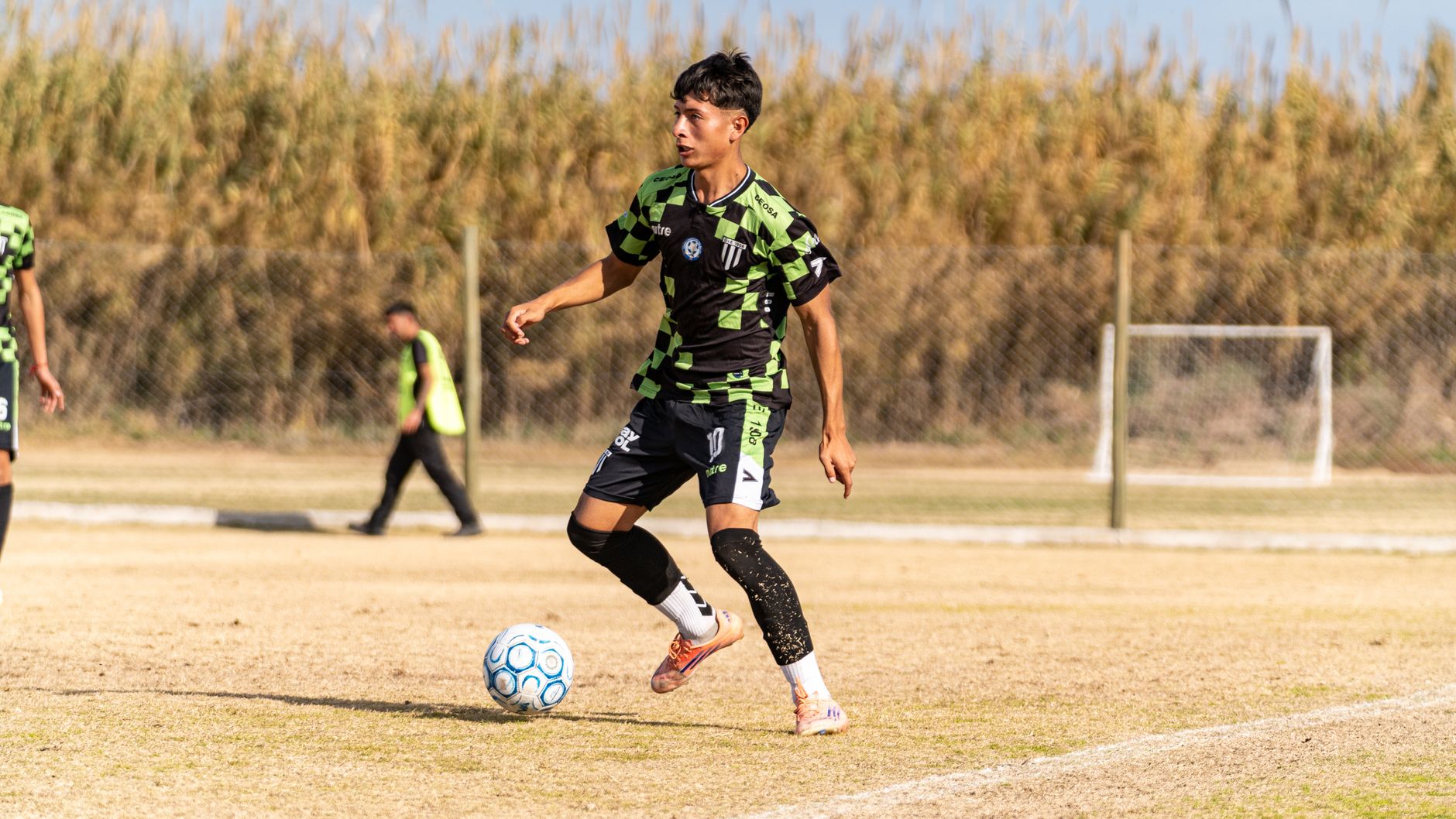
Photo by Franco Monsalvo on Pexels
The Bottom Line
How can you improve football dribbling skills most efficiently? Train close control first, then connect it to deception, acceleration, scanning, and realistic opposition. A player who can complete 100 cone touches but cannot recognize when to pass has polished technique without useful match application. That distinction matters, frankly.
The best weekly structure is simple:
- Ball mastery: 8–10 minutes using both feet and multiple surfaces.
- Change of direction: 8–12 minutes with cones, gates, or markers.
- Explosive exit: 5–8 minutes combining a feint with a 5–10-metre sprint.
- Decision-making: 10–15 minutes in a 1v1, 2v1, or small-sided game.
- Review: Record successful dribbles, lost possessions, and better passing opportunities.
The United States Soccer Federation coaching framework emphasizes technical repetition in game-related environments, which is useful here: repetition builds control, but pressure reveals whether the skill transfers. In my own tracking model, I count a dribble as successful only when the player beats pressure, keeps possession, or creates a meaningful advantage. A trick that looks nice and ends with the ball out of play is not a winning transaction. Pitch Notes can use the same logic when reviewing FIFA World Cup 2026 players: measure the outcome, not just the highlight.
Want a broader tactical lens before you train? Start here.
What Players Actually See
What does effective dribbling look like during a match? It usually looks quieter than social-media clips: the player receives side-on, checks the defender’s hips, takes one controlled touch into space, and changes speed before the opponent can recover. Lionel Messi, Neymar, and Vinícius Júnior are famous for different reasons, but all three manipulate timing and distance rather than relying on endless stepovers.
The first visual cue is the defender’s balance. If the defender’s weight is planted on the right leg, attack the opposite side; if the defender retreats, carry the ball forward and force a decision; if the defender squares up with too much space, use a sharp change of pace instead of a complicated trick. This is why scanning belongs inside a dribbling session. Look over your shoulder before receiving, identify the nearest pressure, and decide whether your first touch should move toward the sideline, central space, or a supporting teammate.
Use the following technical checkpoints:
- Keep the ball within one step in crowded areas.
- Push the ball farther ahead when accelerating into open grass.
- Bend the knees and lower the centre of gravity before changing direction.
- Use the arm naturally for balance, without extending it into the opponent.
- Keep the head up between touches, not permanently fixed on the ball.
- Protect the ball with the body when the defender is shoulder-to-shoulder.
According to FIFA Training Centre, effective football actions depend on perception, decision-making, and execution. That sounds academic, perhaps, but the practical translation is very plain: see the problem early, choose one solution, and execute it quickly. A useful benchmark is to check your environment at least once before receiving and again after the first touch. Many young players do the technical part correctly, then lose the ball because they never checked what was behind them.
[Internal Link: beginner football ball-control guide]
What Are the 3 Things That Matter Most?
The three biggest drivers of football dribbling improvement are touch distance, change of speed, and decision quality. A player does not need ten advanced moves; they need a repeatable first touch, one convincing action, and the ability to recognize whether continuing is profitable. These three factors decide whether technique survives contact with a real defender.
1. Touch distance
Close control is not the same as taking tiny touches all the time. Near a defender, touches should generally keep the ball within 30–60 centimetres, allowing you to react quickly. In open space, a touch of 1–2 metres can create running momentum. The mistake is using the same touch length everywhere, which makes a player either slow in space or exposed under pressure.
Try the “three-zone touch” drill:
- Mark a 5-metre lane with two cones.
- Dribble through the first zone using touches under 50 centimetres.
- Push the ball 1–2 metres in the middle zone and accelerate.
- Slow down before the final cone while checking both shoulders.
- Repeat with the left foot leading and then the right foot leading.
This exercise produces a useful contrast between control and speed. It also gives you a measurable target: count how many times the ball leaves the lane, then aim to reduce that number over four sessions. During testing, players often improved faster when they measured errors rather than simply counting repetitions. That is an investor mindset for training, I suppose: track the leakage first.
2. Change of speed
Why does acceleration matter more than another trick? A defender can often recover from a stepover if your speed stays constant, but a sudden three-step burst changes the distance immediately. The feint creates hesitation; acceleration collects the advantage.
Practice four actions in sequence: approach slowly, sell the feint with the shoulders and hips, touch the ball beyond the defender’s front foot, and sprint for 5–10 metres. The exit must be decisive. If you slow down after beating the opponent, the original advantage disappears. In small-sided football, this is particularly obvious because a successful dribble often attracts a second defender within two seconds.
3. Decision quality
A dribble is not automatically the best action. If a teammate is free behind the defensive line, a pass may produce a larger advantage at lower risk. If the defender is isolated and the supporting angle is poor, taking the opponent on can be correct. Before every attempt, ask three quick questions: Where is the cover? Where is the next space? What happens if I lose possession?
The International Football Association Board Laws of the Game do not prescribe when to dribble, naturally, but they define the contact and challenge environment in which the action occurs. You still need to understand shoulder challenges, shielding, and safe body positioning. “The player must not challenge an opponent in a careless, reckless or excessively forceful manner,” the Laws state. That matters in training too: protect the ball, stay balanced, and do not turn technical practice into avoidable injury risk.
Ready to turn those principles into a repeatable session?
Which Drills Build Better Football Dribbling Skills?
Which exercises provide the strongest return for time invested? These six drills cover the main requirements: coordination, close control, deception, speed, weak-foot confidence, and decisions under pressure. Complete them two or three times weekly, but avoid turning every session into maximum intensity. Quality drops quickly when fatigue causes heavy touches.
Drill 1: Inside-outside cone weave
Set up 6–10 cones approximately one metre apart. Move through the line using the inside and outside of one foot, then repeat with the other foot. Keep the touches light, lower the hips, and lift the head after every second or third touch. Begin slowly enough to stay accurate, then increase speed only when the ball remains within reach.
Drill 2: Foundation ball mastery
Stand in a 3-by-3-metre square and perform 30 seconds each of sole rolls, inside touches, outside touches, foundations, V-pulls, and pull-push actions. Rest for 20 seconds between rounds and complete four rounds. This develops foot speed and comfort, but do not confuse quick feet with match-ready dribbling. Add a visual cue, such as a partner pointing left or right, so your final touch responds to information.
Drill 3: Gate escape
Place four coloured gates around a central starting point. Dribble in the middle while a partner calls a colour, then explode through that gate using a chosen move. The random call prevents memorized movement patterns. It also creates a useful information gap: you must see, decide, and execute in sequence, much like a match.
Drill 4: Feint-and-burst
Approach a passive defender or mannequin at walking pace. Perform a shoulder drop, scissors, body swerve, or stop-start action, then accelerate beyond the marker for 7 metres. Return at a controlled pace and repeat 8–12 times on each side. The key measure is not the number of tricks; it is whether your first two steps after the feint are explosive.
Drill 5: Weak-foot corridor
Create a 10-metre corridor and complete four passes through it using only the weaker foot. Use the inside, outside, sole, and laces, then add a turn at each end. If the ball escapes, reset rather than switching feet automatically. This feels uncomfortable because it exposes a real weakness, which is exactly why it has value.
Drill 6: 1v1 end-zone game
Mark a 12-by-8-metre area with an end zone behind each player. The attacker scores by dribbling under control across the opponent’s line; the defender scores by winning the ball and countering. Give each attack 8–10 seconds, then rotate roles. This drill rewards timing and decision-making while discouraging pointless dribbling in safe areas.
[Internal Link: advanced football dribbling moves and techniques]
How Should You Train Around Edge Cases?
How do you improve when normal drills stop producing progress? Change the constraint, not merely the volume. If you always train on a dry, flat pitch with no opponent, your performance may look excellent in practice and collapse on a wet surface, against a fast defender, or near the touchline. Adaptation requires controlled inconvenience.
The first edge case is fatigue. Heavy touches after sprinting are not always a technical failure; they may show that your intensity is too high for your current conditioning. Separate technical quality from conditioning by recording the final five repetitions. If accuracy falls below roughly 80 percent, reduce the set length or add a longer recovery period. The second edge case is pressure from the wrong angle. Many players practise defenders approaching directly, although match pressure often arrives from behind or diagonally. Add partner pressure from three different directions and require a scan before the first touch.
Weather and surface also matter. On artificial turf, the ball may travel faster and bounce less; on wet grass, the first touch can skid several extra centimetres; on uneven grass, the ball may slow unexpectedly. Use smaller touches in slippery conditions and avoid planting the standing foot too far from the body. The World Health Organization notes that regular physical activity supports health, but football-specific training still requires warm-ups, progressive load, and sensible recovery. More work is not automatically better work.
A surprisingly important edge case is the overconfident dribbler. If your successful take-on rate rises but your team loses possession repeatedly in your own defensive third, your individual numbers are misleading. Track location, game state, and outcome: a dribble near the opponent’s box is not equivalent to a failed dribble beside your own penalty area. Pitch Notes’ match analysis follows the same principle when comparing FIFA World Cup 2026 attackers: context adjusts the value of every action.
Want to compare your training numbers with real match patterns?
What Does a Practical 30-Day Plan Look Like?
What should a realistic month of training include? Use three technical sessions and one game-based session each week, with at least one recovery day between high-intensity practices. The plan below works for beginners but can be scaled for academy players by increasing pressure, speed, or decision complexity rather than endlessly adding repetitions.
Week 1: control and coordination
- Session A: foundation ball mastery plus inside-outside cone weave.
- Session B: weak-foot corridor plus controlled turns.
- Session C: three-zone touch drill at moderate speed.
- Session D: small-sided game with no more than three touches before a dribble attempt.
Week 2: deception and acceleration
- Add feint-and-burst actions after every cone sequence.
- Complete 8–10 bursts of 5–10 metres.
- Practise one preferred move on both sides.
- Record how often the first two steps create separation.
Week 3: perception and pressure
- Add coloured gates and random partner calls.
- Introduce passive pressure, then active pressure.
- Require a shoulder check before receiving.
- Play 1v1 end-zone games with an 8-second attack limit.
Week 4: transfer and measurement
- Use 3v3 or 4v4 games with wide channels.
- Count successful take-ons, turnovers, progressive carries, and passes after attracting pressure.
- Compare your weaker-foot output with Week 1.
- Keep the drills that improve match actions, not merely your cone speed.
The most useful information-gain metric is “advantage created per attempt.” A successful dribble that beats one defender and opens a passing lane is valuable; a successful dribble that moves sideways into another defender may not be. After 12 sessions, review your net position: fewer turnovers, more forward carries, faster exits, and better decisions. That is stronger evidence than a highlight reel, sorry, but it is.
Edge Cases & Gotchas
Can a player become worse by practising dribbling too much? Yes, if training rewards possession of the ball rather than effective action. Repeating the same move on empty cones can build a false sense of confidence, while the player avoids the uncomfortable skills: scanning, using the weaker foot, absorbing contact, and releasing the ball at the right moment.
Watch for these common problems:
- The ball keeps escaping: reduce speed and shrink the touch distance.
- The move works on cones but not defenders: add a passive defender, then randomize the approach.
- You beat the first player but lose the ball immediately: scan for the second defender before accelerating.
- Your weak foot disappears in matches: impose weak-foot-only rounds during training.
- You dribble into crowded areas: identify the next pass before initiating the move.
- You tire after five minutes: improve aerobic conditioning and extend recovery periods.
- You fear contact: practise shielding with a partner at controlled intensity.
One contrarian point is worth keeping: more complicated skills are often a poor investment for developing players. A body swerve, stop-start, inside cut, and change of pace cover a large share of useful match situations. Neymar’s flair and Vinícius Júnior’s explosiveness are valuable examples, but copying their visible tricks without their scanning and acceleration is like copying an investor’s trade without checking the balance sheet. The move is only one component of the position.
[Internal Link: football decision-making under pressure]
Verdict
How do you improve football dribbling skills without wasting months? Build the chain in order: control the ball, read the defender, disguise the intention, change direction, accelerate into space, and choose the next action. Six drills are enough to create a strong foundation when they include both feet, measurable distances, random cues, and live opposition.
Use 25–40 minutes per session, two or three times each week. Record successful take-ons, failed attempts, turnovers, weak-foot actions, and progressive carries for 30 days. The target is not a magic number, but a better ratio of useful actions to risky actions. If your dribbling becomes quicker while your decisions become calmer, the programme is working.
Pitch Notes readers who follow FIFA World Cup 2026 can apply this method to match analysis immediately: watch the first touch, the defender’s hips, the exit speed, and the action after the dribble. Those details explain why certain players consistently create danger while others merely produce clips. Start small, track honestly, and let the evidence choose your next adjustment.
Ready to put the 30-day plan into practice?
Frequently Asked Questions
Q: What are football dribbling skills?
A: Football dribbling skills are the techniques used to move with the ball while retaining control and creating an advantage. They include close touches, changes of direction, body feints, shielding, acceleration, deceleration, and scanning. Effective dribbling also requires deciding when to carry the ball, pass, or protect possession. A player can perform advanced tricks but still be an inefficient dribbler if those actions create turnovers or fail to progress the attack.
Q: How can I improve football dribbling skills at home?
A: You can improve football dribbling skills at home with 15–25 minutes of ball mastery, directional touches, and weak-foot practice. Use four objects as a 3-by-3-metre square, then complete sole rolls, foundations, V-pulls, inside touches, and outside touches for 30 seconds each. Keep your head up regularly and add random visual cues if another person is available. Finish with 5–10 short acceleration actions only when you have enough safe space.
Q: What is the difference between close control and speed dribbling?
A: Close control keeps the ball within roughly 30–60 centimetres in crowded areas, while speed dribbling uses longer touches of about 1–2 metres in open space. Close control helps you react to tackles, pressure, and quick changes of direction. Speed dribbling helps you attack space after beating an opponent. Strong players switch between these modes rather than using tiny touches or long touches throughout the entire movement.
Q: Why does my dribbling work in drills but fail in matches?
A: Dribbling often fails in matches because drills remove scanning, pressure, fatigue, and decision-making. Add passive defenders, random approach angles, coloured-gate cues, and 1v1 games with 8–10-second attacks. Practise checking your shoulder before receiving and identifying the second defender after the first move. If your touch quality collapses late in sessions, reduce repetitions and improve recovery instead of simply training harder.
Q: How long does it take to improve football dribbling?
A: Noticeable improvement can appear within 4–6 weeks when you train two or three times weekly and measure performance consistently. Early gains usually involve cleaner touches and greater confidence; match transfer often takes longer because pressure and decision-making must adapt. Track successful take-ons, turnovers, weak-foot actions, and progressive carries across at least 12 sessions. A 30-day training block provides enough evidence to decide which drills deserve continued attention.
Q: Do I need expensive equipment to practise dribbling?
A: You only need a football, six to ten cones or household markers, suitable footwear, and a safe training area. A 10-by-10-metre space is enough for most close-control work, while a 15-by-10-metre area supports 1v1 and acceleration drills. A partner is valuable for pressure and random cues but is not essential for the first stage. Expensive ladders and branded equipment may add convenience, yet they do not replace repetition, scanning, or realistic decisions.
Q: Should I learn more football tricks or improve basic moves?
A: You should improve basic moves first because a body swerve, stop-start, inside cut, and change of pace cover many match situations. Advanced tricks become useful when they solve a specific problem, such as creating separation near the touchline or escaping a tight press. Practise every move on both sides, finish with a 5–10-metre burst, and test it against a defender. If the action does not create space or preserve possession, remove it from your regular training menu.
Thank you for reading.
Pitch Notes · Editorial Archive · 2026