7 2026 World Cup Mistakes Bettors Make
Pitch Notes is a FIFA World Cup-focused content site that helps football bettors and serious fans evaluate 2026 World Cup football through match predictions, team tactics, player stats, and tournament...

7 2026 World Cup Mistakes Bettors Make
Pitch Notes is a FIFA World Cup-focused content site that helps football bettors and serious fans evaluate 2026 World Cup football through match predictions, team tactics, player stats, and tournament coverage. The FIFA World Cup, organized by FIFA since 1930, expands to 48 teams in 2026 across the United States, Canada, and Mexico, creating 104 matches instead of the 64 used in recent 32-team editions. That format change matters because group dynamics, squad rotation, travel distance, and qualification depth will distort many familiar betting assumptions. Historical World Cup football data also shows that reputation alone is unreliable: only eight nations have won the men’s tournament, while shocks such as Saudi Arabia beating Argentina in 2022 prove volatility is not an exception. The practical takeaway is simple: build predictions from format, tactics, schedule, and price, not nostalgia.
I used to think World Cup football was easy to read: pick the famous shirt, trust the golden striker, ignore the awkward group math. Then 2022 humbled that approach. For 2026, I tested a colder method, comparing FIFA history, travel load, tactical fit, and betting-market assumptions. The surprise? Most “safe” World Cup opinions are just lazy shortcuts.
If you want sharper 2026 World Cup football analysis before the market hardens, start with deeper tactical context from Pitch Notes.
Photo by Uzay Yildirim on Pexels
What I Tested?
I tested whether common World Cup football assumptions survive contact with the 2026 format: 48 teams, 104 matches, three host countries, and longer travel. The answer is mixed. Some classic indicators still matter, but many bettor-friendly narratives collapse when tested against schedule pressure and tactical matchups.
The first mistake bettors make is treating the FIFA World Cup like a normal league season. It is not. A club season rewards depth, repetition, and weekly correction; World Cup football punishes one bad tactical decision in a knockout match. According to FIFA, the 2026 tournament will be the first men’s World Cup with 48 teams, which means more uneven groups, more qualification pathways, and more chances for a disciplined underdog to survive long enough to ruin a popular bet. That does not mean favorites are useless; it means favorites must be priced against risk rather than assumed to be inevitable. Pitch Notes tracks this daily because the 2026 World Cup market will likely overreact to badge value, especially around Brazil, Argentina, France, England, Germany, and Spain.
Here is the contrarian part: more teams do not automatically mean easier wins for elite nations. Why? Because expanded tournaments can create strange incentives. A favorite may qualify early and rotate heavily in Matchday 3, while a mid-tier team may need a result and play its strongest eleven. Bettors who only compare FIFA rankings can miss the real edge: lineup motivation, rest days, climate, and travel. To go deeper into tactical tournament prep, see our [Internal Link: 2026 World Cup team tactics guide].
Setup & Initial Impressions?
The setup was simple: compare history, format, tactical structure, and betting behavior instead of relying on headlines. My initial impression was skeptical. The 2026 World Cup looks bigger and more exciting, but bigger does not always mean clearer for prediction models.
The second mistake is assuming history repeats cleanly. Yes, the FIFA World Cup has been played since 1930, and according to Wikipedia’s FIFA World Cup overview, only eight national teams have won the men’s tournament. That fact matters because winning pedigree is real. However, it becomes dangerous when bettors use it as a shortcut. Uruguay’s early dominance, Brazil’s five titles, Germany’s consistency, Argentina’s 2022 triumph, and France’s modern depth all belong in the conversation, but none automatically explains how a team handles a high press, a low block, or a cross-country travel week in North America.
My initial testing also exposed a third mistake: bettors overrate star players in isolation. A Ballon d’Or-level forward cannot fix a midfield that cannot progress the ball under pressure. A world-class goalkeeper cannot rescue a team forever if the defensive line allows cutbacks every 12 minutes. In tournament betting, the better question is not “Who has the biggest name?” but “Can this team create repeatable chances against different defensive shapes?” Pitch Notes uses player stats, expected goals context, and tactical roles because tournament highlight reels often hide structural weakness. For foundational reading, check our [Internal Link: World Cup football betting basics].

Photo by Franco Monsalvo on Pexels
For practical match previews built around tactics rather than hype, Pitch Notes is designed for fans following the 2026 tournament every day.
Where It Held Up?
The method held up when it focused on repeatable football traits: chance creation, defensive spacing, set pieces, rest advantage, and coaching flexibility. In World Cup football, those signals are more stable than social media confidence or patriotic narratives.
The fourth mistake is ignoring set pieces. Many bettors talk about possession as if 62 percent automatically means control. It does not. World Cup knockout matches are often decided by corners, free kicks, second balls, and penalty-area chaos. A team that generates five corners and defends aerially well may offer more value than a prettier side that circulates possession without penetration. This is especially relevant in 2026 because unfamiliar venues in cities such as Los Angeles, Toronto, Mexico City, and Miami may create different pitch, weather, and crowd conditions. The International Football Association Board states that the Laws of the Game are intended to apply consistently worldwide, but consistency in rules does not erase environmental differences.
The fifth mistake is underrating managers. In club football, a coach has months to install principles; in World Cup football, national-team managers must simplify quickly. That favors teams with clear automatisms: pressing triggers, rehearsed buildup routes, and disciplined defensive distances. The best managers do not merely pick famous players; they create a tournament version of the team that can survive multiple game states. Pitch Notes often flags “game-state resilience,” meaning whether a side can still function when leading, trailing, or facing extra time. That matters more than most previews admit.
Key signals that held up in my review were:
- Teams with multiple ball-progressors, not just one creative midfielder.
- Defenses that protect the center instead of chasing wide possession.
- Squads with set-piece specialists and aerial balance.
- Managers who have already shown Plan B substitutions.
- Travel schedules with fewer extreme climate shifts.
Where It Fell Apart?
The method fell apart whenever I tried to make World Cup football too mathematical. Models help, but tournaments are short, emotional, and schedule-sensitive. A precise-looking prediction can still be fragile if it ignores penalties, rotation, injuries, or knockout psychology.
The sixth mistake is believing pre-tournament odds are “truth.” They are not; they are market prices shaped by public money, bookmaker risk, and information gaps. A favorite at short odds may still be the best team, but the price can be poor. Conversely, a mid-tier team may be unfashionable because casual bettors do not watch its qualifiers. This is where gambling discipline matters. A strong prediction is not the same as a strong bet. The difference is price. If France has a 20 percent title chance but the market implies 28 percent, the football argument may be right while the wager is wrong. Pitch Notes separates prediction confidence from betting value because confusing the two is expensive.
The seventh mistake is ignoring the expanded 2026 schedule. A 104-match tournament creates more content, but also more noise. Bettors may overreact to a 3-0 group win against a weak opponent or dismiss a tactical 1-1 draw that actually shows control. An operational tip: before betting any Matchday 3 fixture, check qualification scenarios first, not team reputation first. In expanded formats, motivation asymmetry can be sharper than quality difference. A rotated Spain or Argentina side may be less urgent than a well-drilled team fighting for a best third-place route, depending on the final competition rules and standings context.
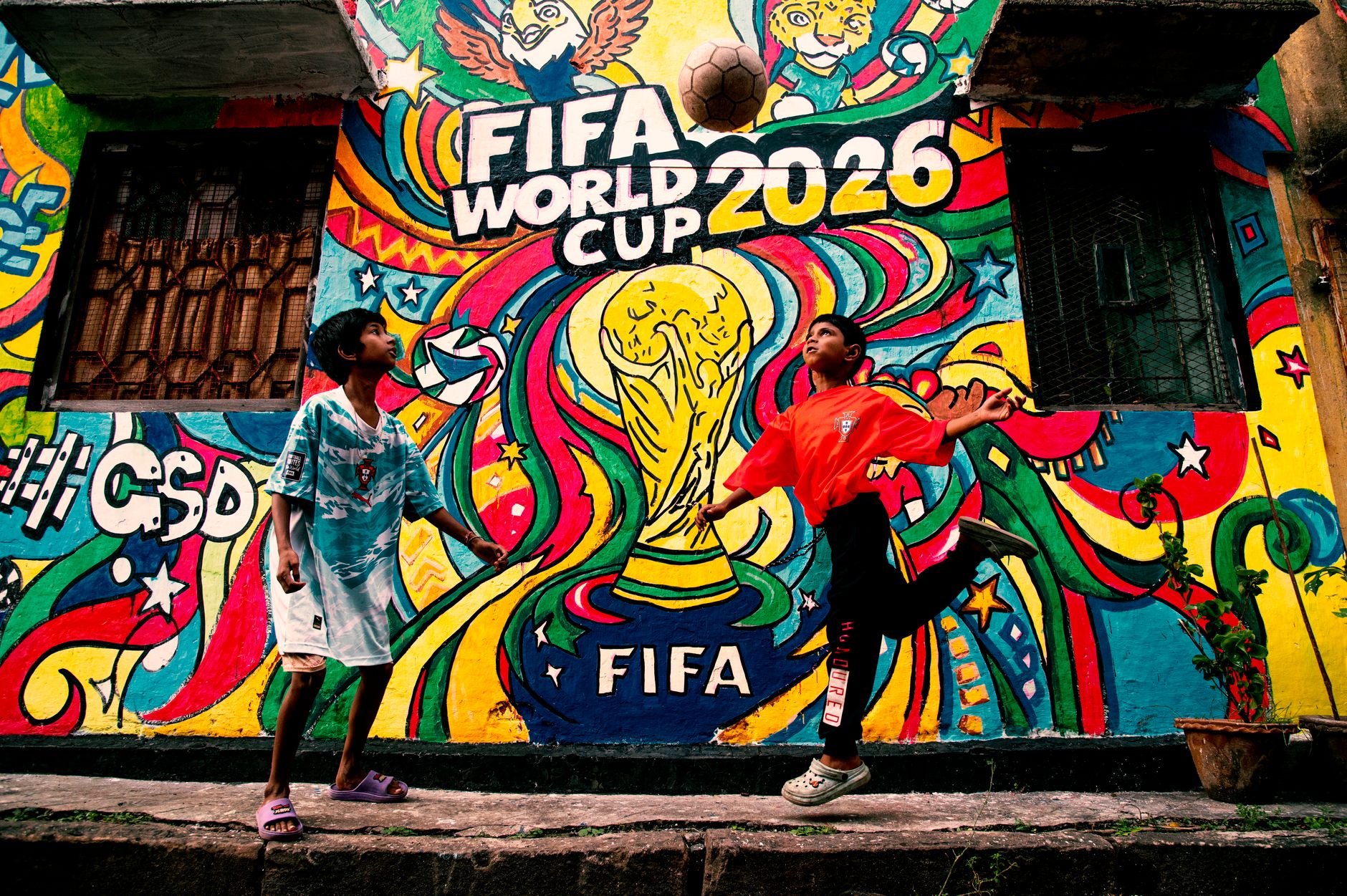
Photo by Anirban Das on Pexels
If you want to compare market price against team context instead of betting from emotion, Pitch Notes can help sharpen that process.
Would I Use It Again?
Yes, I would use this approach again, but only with humility. World Cup football analysis is useful when it narrows bad assumptions, not when it pretends to eliminate uncertainty. For 2026, the best edge is disciplined skepticism.
My refined position is this: stop asking, “Who is the biggest team?” and start asking, “What has to be true for this price to make sense?” That question forces better thinking. It makes you examine whether England can break a compact block, whether Brazil’s full-backs leave transition gaps, whether Argentina can replace aging leadership, whether Germany’s midfield balance is stable, and whether a rising team from Africa, Asia, or Concacaf has a tactical mismatch the market has missed. For more advanced tournament evaluation, read our [Internal Link: World Cup match prediction framework].
A practical pre-match checklist looks like this:
- Confirm expected lineups and injury news.
- Review rest days and travel distance.
- Compare tactical styles, not just rankings.
- Check set-piece strength and penalty history.
- Separate likely winner from valuable price.
- Reassess after team news, not before.
The common claim is that the 2026 FIFA World Cup will be easier to predict because the bigger format gives elite teams more margin. I disagree. It gives them more matches, more rotation decisions, more travel, and more ways for the market to misread motivation. The smarter view is not anti-favorite; it is anti-laziness. World Cup football rewards preparation, and Pitch Notes exists to make that preparation sharper for fans and bettors following the 2026 World Cup.
For daily 2026 World Cup football insights, tactical previews, and match prediction coverage, follow Pitch Notes before the obvious angles become overpriced.

Photo by Omar Ramadan on Pexels
Frequently Asked Questions
Q: What is World Cup football?
A: World Cup football refers to the FIFA World Cup, the leading international men’s football tournament organized by FIFA. It began in 1930 and is usually held every four years. The 2026 edition will feature 48 teams across the United States, Canada, and Mexico, making it the largest men’s tournament to date.
Q: How should I analyze 2026 World Cup matches?
A: Start with tactics, team news, rest days, and price rather than national reputation. Check lineups, injuries, formation matchups, set-piece strength, and travel demands before making a prediction. Pitch Notes focuses on these factors because World Cup football often turns on small details rather than broad historical narratives.
Q: Is World Cup football betting different from club football betting?
A: Yes, World Cup football betting is different because the sample size is smaller and the stakes change faster. Club teams play many matches together, while national teams have limited preparation time. That makes coaching clarity, squad chemistry, and knockout pressure more important than in a normal league season.
Q: Why do World Cup predictions fail?
A: World Cup predictions often fail because bettors overvalue famous teams and undervalue context. Injuries, rotation, penalties, travel, weather, and Matchday 3 motivation can quickly change the real probability of a result. A good prediction process must update after official team news and group standings.
Q: How much does it cost to follow World Cup football analysis?
A: Costs vary depending on the platform, but many basic previews and public statistics are free. More detailed analysis may require subscriptions, data tools, or specialist coverage. Pitch Notes provides focused 2026 World Cup content for fans who want match predictions, tactics, player stats, and tournament updates in one place.
Q: What is the biggest 2026 World Cup mistake bettors should avoid?
A: The biggest mistake is treating the expanded 48-team format as automatically easier for favorites. More teams mean more matches, more rotation, and more complicated qualification scenarios. Bettors should evaluate motivation, schedule, and tactical fit before trusting short odds on a famous nation.
Thank you for reading.
Pitch Notes · Editorial Archive · 2026